A new high-efficiency gas furnace and a cold-climate heat pump, designed and installed as one system. The heat pump heats and cools your home most of the year; the furnace takes over automatically when an Arctic outflow hits. Eligible homes can get up to $4,000 back from FortisBC.
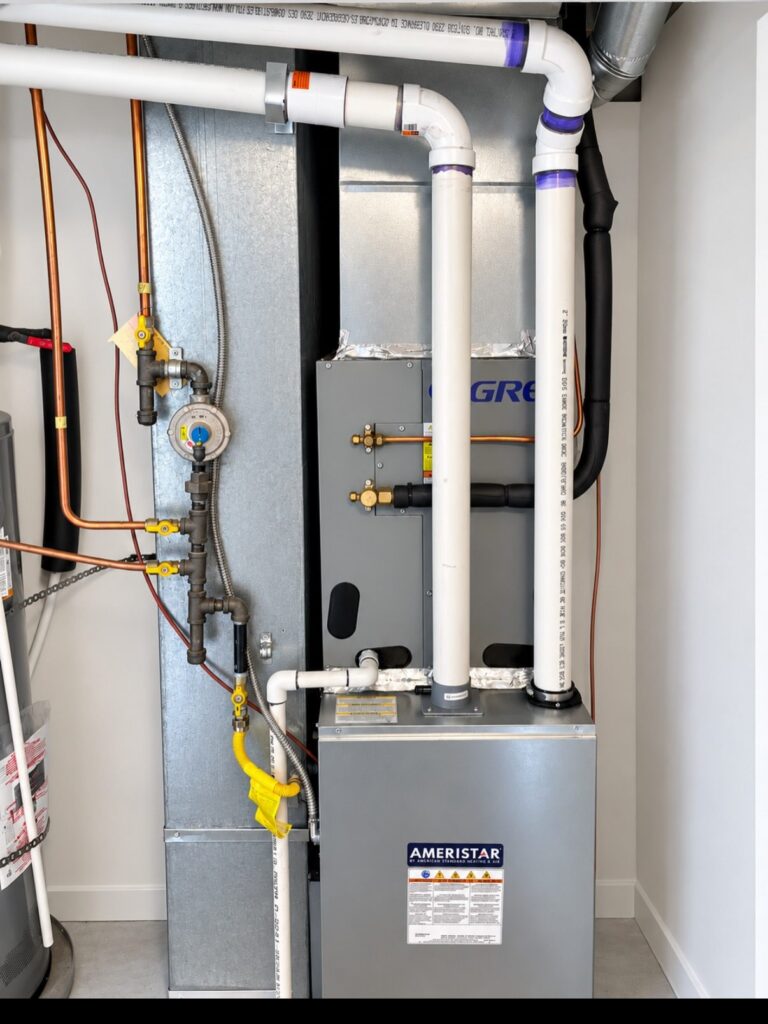
A dual fuel heating system uses two heat sources: an electric heat pump and a natural gas furnace. A smart thermostat decides which one runs, based on the outdoor temperature.
Some people call it a hybrid heat pump furnace, or a heat pump with gas furnace backup. It’s the same idea: the right fuel at the right temperature.
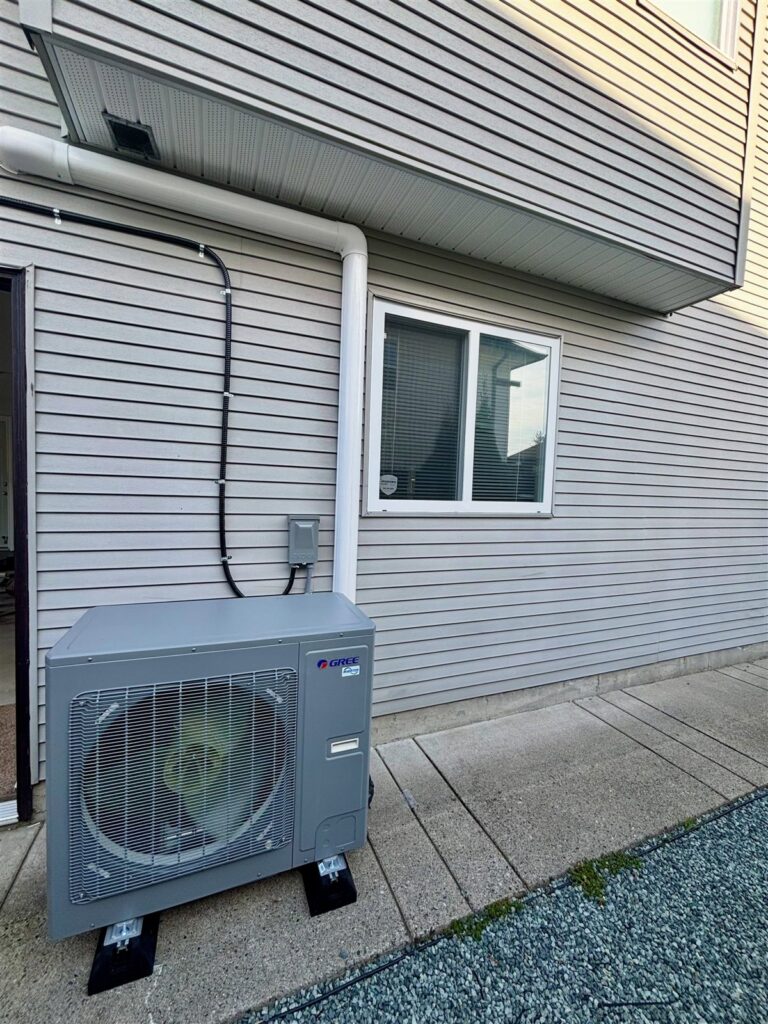
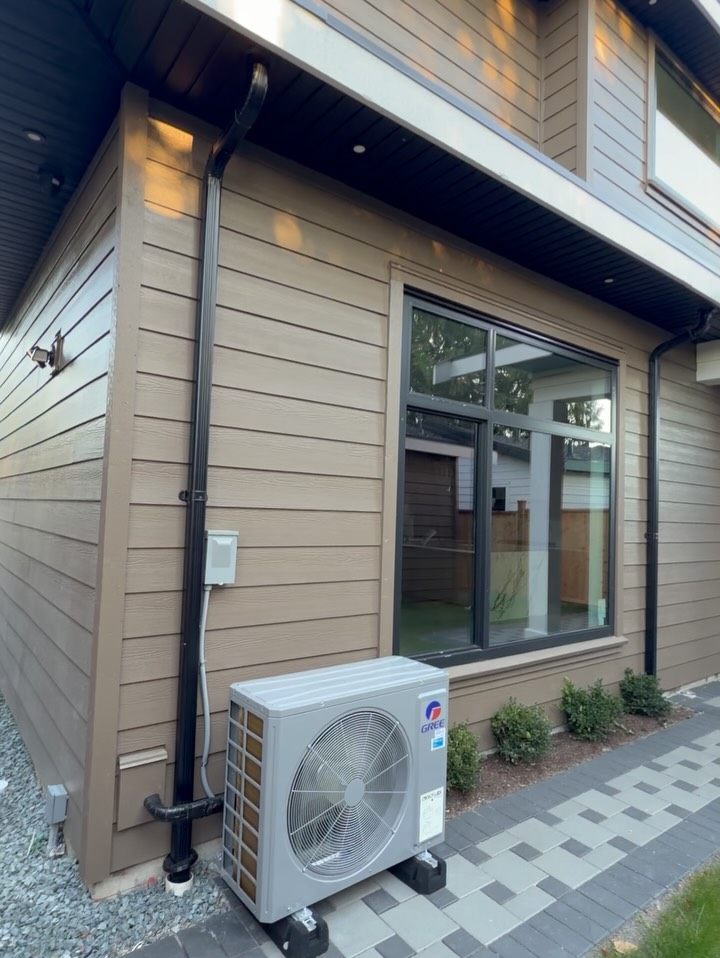
Abbotsford, Chilliwack and Mission have mild, wet winters, with most days between 0°C and 8°C, which is where heat pumps do their best work. But a few times each winter, Arctic outflow winds push temperatures far lower. In January 2024 Abbotsford dropped to −15.4°C, and BC Hydro set a record for power demand.
A dual fuel heat pump handles both: efficient electric heat for most of the season, and reliable gas heat for the coldest days. Summers matter too. Abbotsford hit 42.9°C in June 2021, and a dual fuel system gives you full air conditioning without a separate AC unit.
Since BC removed the consumer carbon tax in April 2025, natural gas has become cheaper to heat with, while BC Hydro rates have kept rising. Electric heating in winter also pushes many homes into BC Hydro’s higher Step 2 rate.
That’s why we rarely recommend switching a gas home fully to electric. A dual fuel system lets you:
Savings depend on your home, your thermostat settings and current rates. We’ll show you expected running costs using today’s FortisBC and BC Hydro rates before you decide.
See our Full Mechanical Room Upgrade.
FortisBC relaunched its dual fuel rebate for installations completed on or after October 15, 2026. Most eligible homes can get up to $4,000.
Income-qualified households can get up to $8,000. Your existing gas furnace must be at least 15 years old, and the installation must follow FortisBC’s rules on sizing, equipment, the switchover temperature and a connected thermostat. We handle all of that.
We check your furnace’s age, ductwork, electrical panel and where the outdoor unit can go.
Room by room, to CSA F280.
Equipment, permits, running-cost estimate and expected rebate, line by line.
Usually two days: the old furnace and AC removed, new furnace and heat pump installed, vented and wired.
We set the switchover temperature, test both heat sources and cooling, and submit the rebate photos and data.
We show you the thermostat and how the system switches between gas and electric.
What changes the price: system size, furnace type, heat pump efficiency, ductwork changes, electrical panel capacity and venting. The FortisBC rebate is paid after installation, once your application is approved.
Usually around 0°C to 5°C, depending on your home and rates. For the FortisBC rebate in the Lower Mainland, the switchover must be set at 5°C or lower.
For most gas-heated Fraser Valley homes, yes. It keeps gas as a reliable backup for outflow cold snaps and lets you use whichever fuel is cheaper. All-electric makes more sense in homes without gas, or in new builds aiming for higher Zero Carbon Step Code levels.
Yes, if the furnace is in good condition. That’s not the full dual fuel package and won’t qualify for FortisBC’s rebate, but it adds cooling and efficient mild-weather heat.
Usually two days, including removing the old equipment, installing both units and commissioning.
No. Like any modern furnace, the gas furnace needs power for its fan and controls. A generator connection can be added if outages are a concern in your area.
Book a free in-home estimate and we’ll show you the system, the running costs and the rebate you could get. Serving Abbotsford, Chilliwack and Mission. Prefer to talk first? Call 604-619-0202.